Glossary
Voice cloning
Synthesizing a new voice that sounds like a specific real person, typically from a short audio sample.
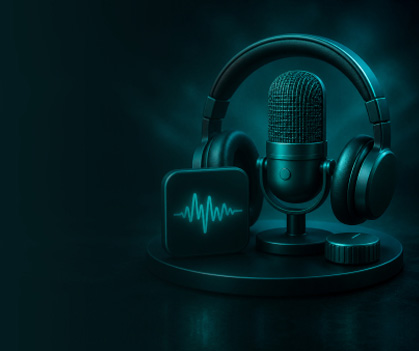
Voice cloning models learn the timbre, pacing, accent, and emotional 'fingerprint' of a target voice. Modern systems need only a short sample of clean speech to produce a clone that can read arbitrary new text in that voice.
Used responsibly, voice cloning is a creator superpower: voice new scripts without a recording session, update evergreen videos without re-recording, or keep your voice for accessibility. Used carelessly it's a deepfake risk — always get consent from the voice owner.
How a clone is made
The model listens to the sample and extracts what makes the voice recognizable: pitch range, resonance, the shape of the vowels, rhythm and breathing. It does not store the sentences of the sample. From then on a text-to-speech model speaks any new text with those traits. Quality depends on the sample more than on its length: one speaker, a quiet room, no music and a natural delivery beat a long, noisy recording.
Voice cloning in VlogMe
In Audio Studio you clone a voice from 20 to 60 seconds of one clear speaker, uploaded from your device (up to 8 MB) or picked from Lab. Before the clone is made, you confirm that you have the speaker's consent and the right to clone the voice. The clone then appears in the voice picker of AI Voiceover and Voice Changer, next to the ElevenLabs library voices. An account keeps up to three clones, and you can delete one at any time.
A worked example: a yoga teacher records herself reading a calm paragraph for one minute in a quiet room and clones her voice. Each week she types the script of the next class intro, generates the voiceover with her clone and uses the track in a talking-avatar video made from her portrait. She recorded once and publishes every week.
Limits and risks
- A clone reproduces the voice, not the performance: a sample of calm speech will not shout, sing or cry convincingly. Record the sample in the style you need.
- Accent and emotion carry over imperfectly into other languages; listen to every take before you publish.
- Cloning is allowed only with the owner's permission, for the uses, languages and period the owner agreed to. The voices of minors and imitations of public figures are not allowed (Terms, section 6).
- If a person withdraws consent, delete the clone and the projects that use it.
Questions
How long should the sample be?
In VlogMe, 20 to 60 seconds. A clear minute of one speaker is plenty; a longer, noisier file does not help.
Can I clone a celebrity or a relative?
Only with their permission. A voice is personal, and a public figure's voice is often protected as part of their likeness; without consent it may not be cloned.
Does a cloned voice speak other languages?
The ElevenLabs multilingual models can speak the languages they support with a cloned voice and keep much of its character. Check the pronunciation in each language before you publish.