
Glossary
Talking-head video
A video format where one person (or avatar) talks directly to camera — the dominant format for tutorials, sales, courses and social explainers.
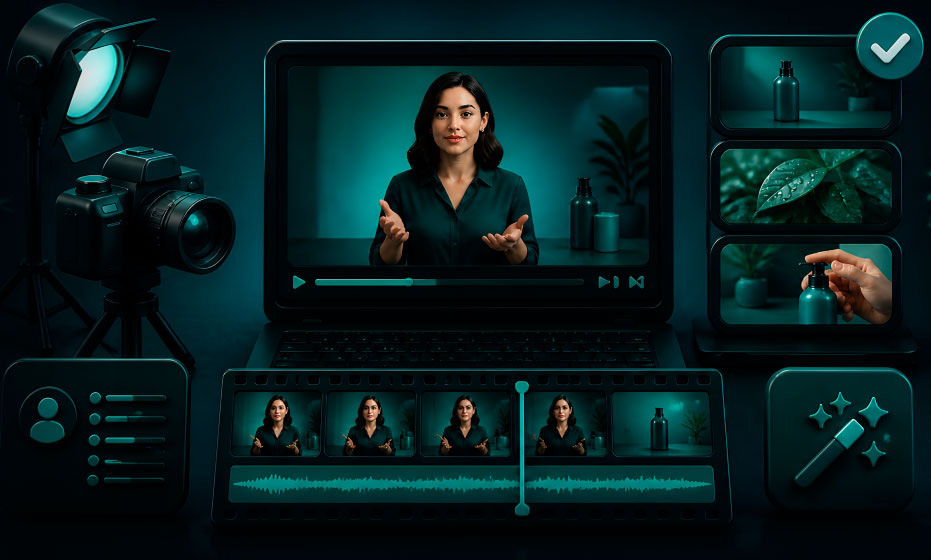
A talking-head video shows one person, or an avatar, speaking straight to the camera: usually head and shoulders, one voice, few cuts. It is the default format of tutorials, course lessons, sales messages, founder updates and social explainers, because a face and a voice carry an argument faster than slides or a screen recording.
AI talking-head generators remove the bottleneck of recording, re-recording, lighting, and editing: you can publish the same script in several languages, with different presenters, without booking a single shoot.
What makes a talking-head video work
- The first sentence. Say why the viewer should stay before you introduce yourself.
- Framing. Head and shoulders, eyes about a third from the top, even light on the face. Vertical 9:16 fills a phone screen; 16:9 leaves room for titles on YouTube and websites.
- Sound before picture. Viewers forgive an average image sooner than muddy audio, so a clean voice matters more than the camera.
- Captions. Many people watch without sound; captions carry the message when the audio is off.
- Length. 15 to 60 seconds for Shorts, Reels and TikTok; a few minutes for a tutorial or a sales walkthrough.
Making one without a camera in VlogMe
A talking-head video can start from a single portrait. In Image to talking video you upload the portrait, write the script, turn it into a voice in Audio Studio or upload your own recording, and render in 9:16, 1:1 or 16:9. Hedra Avatar and OmniHuman 1.5 animate your image; HeyGen Avatar V speaks your audio through one of its own preset presenters. The same presenter then carries next week's script, another language or another format. For product and sales messages, the AI spokesperson page shows the same workflow with a brand presenter.
Limits and risks
- An AI presenter says exactly what you write: read the script aloud first and cut every sentence you would not say yourself.
- A long monologue in one static frame tires viewers; split longer scripts into chapters or cut to product footage.
- The face and voice must be yours, a fictional character's, or used with permission, and the presenter should be labelled as AI where a platform or law requires it.
Questions
Is a talking-head video the same as a talking avatar?
No. Talking head is the format: one person speaking to camera. A talking avatar is one way to produce it without filming.
Do I need a microphone?
Not for an AI presenter: text-to-speech or a cloned voice replaces the recording. If you record yourself, a simple clip-on microphone improves the result more than a better camera.
Which aspect ratio should I choose?
9:16 for Shorts, Reels and TikTok, 1:1 for feeds, 16:9 for YouTube, courses and websites.